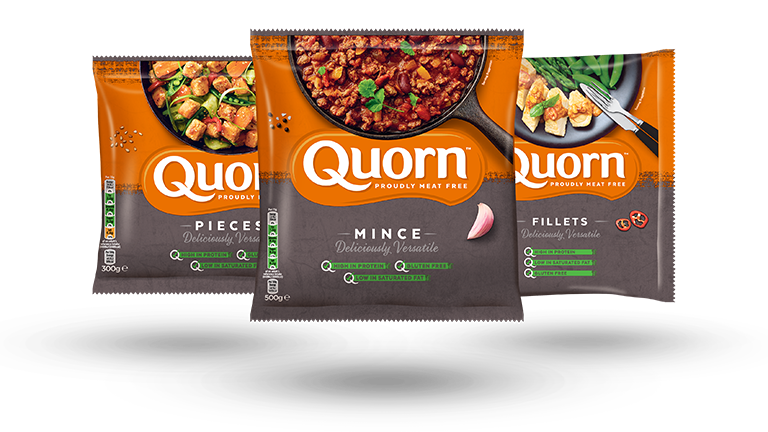
What is Quorn® and Quorn's mycoprotein?
Quorn is an alternative protein source made of Quorn's mycoprotein, a unique and nutritious food source that can form part of a balanced diet while supporting the health of the planet. ‘Myco’ is derived from the Greek root μύκης (mykes), meaning fungus. Quorn's mycoprotein is high in protein, a complete source of amino acids, high in fibre, low in total fat, contains no cholesterol, and is a source of key micronutrients such as choline, selenium and zinc.
What is Quorn’s unique ingredient, Quorn's mycoprotein, made of?
Quorn is made of Quorn's mycoprotein, a vegan protein source that can contribute towards a balanced diet. Quorn's mycoprotein is suitable for those following a plant-based diet, as well as those looking to reduce their meat consumption or dietary impact on the environment in a simple and healthy way. The main ingredient of Quorn's mycoprotein is Fusarium venenatum, an ascomycete, a type of fungus that naturally occurs in the soil. Fungi are a separate kingdom to plants and animals which includes mushrooms as well as a huge variety of micro-fungi species such as Fusarium and yeasts. Fusarium venenatum is fed with human-grade carbohydrate in large air-lift fermenters before the liquid is separated by centrifugation to leave behind the Quorn's mycoprotein ‘dough’, closely resembling bread dough, which is used in a variety of ways to make Quorn products.
How is Quorn's mycoprotein for Quorn products made?
The process of making Quorn begins here. Quorn's mycoprotein is made in air-lift fermenters, where it grows on high-grade carbohydrates – derived from maize and wheat. These fermenters are 40 metres high and run continuously for 5 weeks at a time.

Step 1
The fermenter is sterilised and filled with water containing glucose and various essential salts. Then, a few spores (equivalent to seeds in the plant kingdom) of Fusarium venenatum, the fungus at the heart of Quorn's mycoprotein, is ‘woken up’ by growing it in a small conical flask with a little glucose and salts solution, before it is introduced into the main fermenter.
Step 2
Once the organism has begun to grow, a continuous feed of nutrients including; glucose, ammonium, potassium, magnesium and phosphate, as well as trace elements is added. The pH balance, temperature, nutrient concentration and oxygen are all constantly adjusted in order to achieve the optimum growth rate.
Step 3
To avoid the fermenter overflowing, the fermented broth containing the fungus is continuously taken off at exactly the same rate as the feeds are added, ensuring that the fermenter can produce for weeks at a time. The harvested broth is gently heated, and the fungal mycelium formed in the fermenter vessel is harvested by centrifugation to give the Quorn's mycoprotein paste, or ‘dough’. During this heating step, the ribonucleic acids are broken down and dissolved into the surrounding liquids, where they remain after the centrifugation. Interestingly, these can be dried and used as a flavouring, a bit like the way that yeast extract is produced!
Step 4
The Quorn's mycoprotein is then seasoned and mixed with a little free-range egg, or plant protein in vegan products, to help bind the mix. It is then steam cooked for about 30 minutes, and chilled, before being shaped for a variety of different products.
Step 5
The product is then frozen. This is a crucial step in the process because the controlled growth of the ice crystals helps to push the fibres of the dough together, creating bundles that give Quorn's mycoprotein its meat-like texture.